
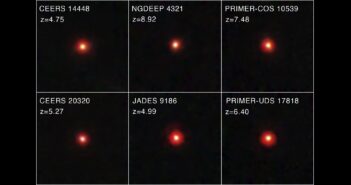
Seeing Red: New Constraints on Origin of JWST’s Little Red Dots
Supercritical accretion of black holes may drive the formation of enigmatic “little red dots.”
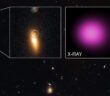
Most galaxies are expected to contain at least one massive black hole, but how robust is this prediction? New research uses simulations to look at which galaxies tend to have more or fewer black holes, and with what properties.
Get to know your neighbors with a new database of nearby star clusters, stellar associations, and substellar objects.
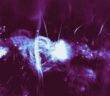
The center of our galaxy is known to host hundreds of radio-emitting filaments, but the energy source for these features remains a mystery. New simulations attempt to shed light on what powers galactic non-thermal filaments.
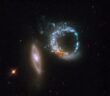
Not All Black Holes Who Wander Are Lost
Astrobites reports on a new diagnostic tool used to understand how the neighborhood a black hole grows up in may affect the rest of its life.
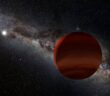
The white dwarf–brown dwarf pair J0404+1112 — one of only about a dozen known systems like it — offers researchers a chance to study a substellar atmosphere blasted with intense radiation.
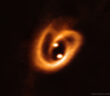
Globular clusters have far fewer binary stars than the solar neighborhood. New research identifies black hole burning as the culprit.
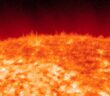
Why do spicules — tiny spikes of plasma on the Sun — appear to rotate, split, and merge? New simulations reveal the possible cause of these motions.
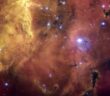
The Invisible Architecture Between the Stars
Astrobites reports on why interstellar magnetic fields can appear ordered or tangled, depending on which gas clouds you measure and how.